Is It Time to Upgrade Your Car Audio System? A Guide for Marietta, GA Drivers
Warning Signs Your Car’s Sound System Is Holding Back Your Drive
A car audio system does not have to stop working completely before it becomes frustrating. Many drivers continue using factory speakers, an outdated stereo, or an unreliable Bluetooth connection simply because the system still produces sound. Over time, however, poor audio quality and limited technology can make commuting, road trips, and everyday errands far less enjoyable.
For drivers in Marietta, Smyrna, Kennesaw, East Cobb, and surrounding Metro Atlanta communities, a car audio upgrade can improve more than music quality. A modern system can provide clearer hands-free calling, easier navigation, dependable smartphone integration, and controls that are more convenient to use while driving.
Some audio problems develop gradually. A speaker may begin crackling only at higher volumes, or one side of the vehicle may sound slightly quieter than the other. Because these changes happen slowly, drivers may not realize how much sound quality they have lost until the problem becomes severe.
One of the most common warning signs is distortion. Music may sound fuzzy, harsh, or broken when the volume increases. Voices may become difficult to understand, while bass notes may create buzzing or rattling sounds. Distortion can result from worn speakers, damaged wiring, poor connections, or a system that does not provide enough clean power.
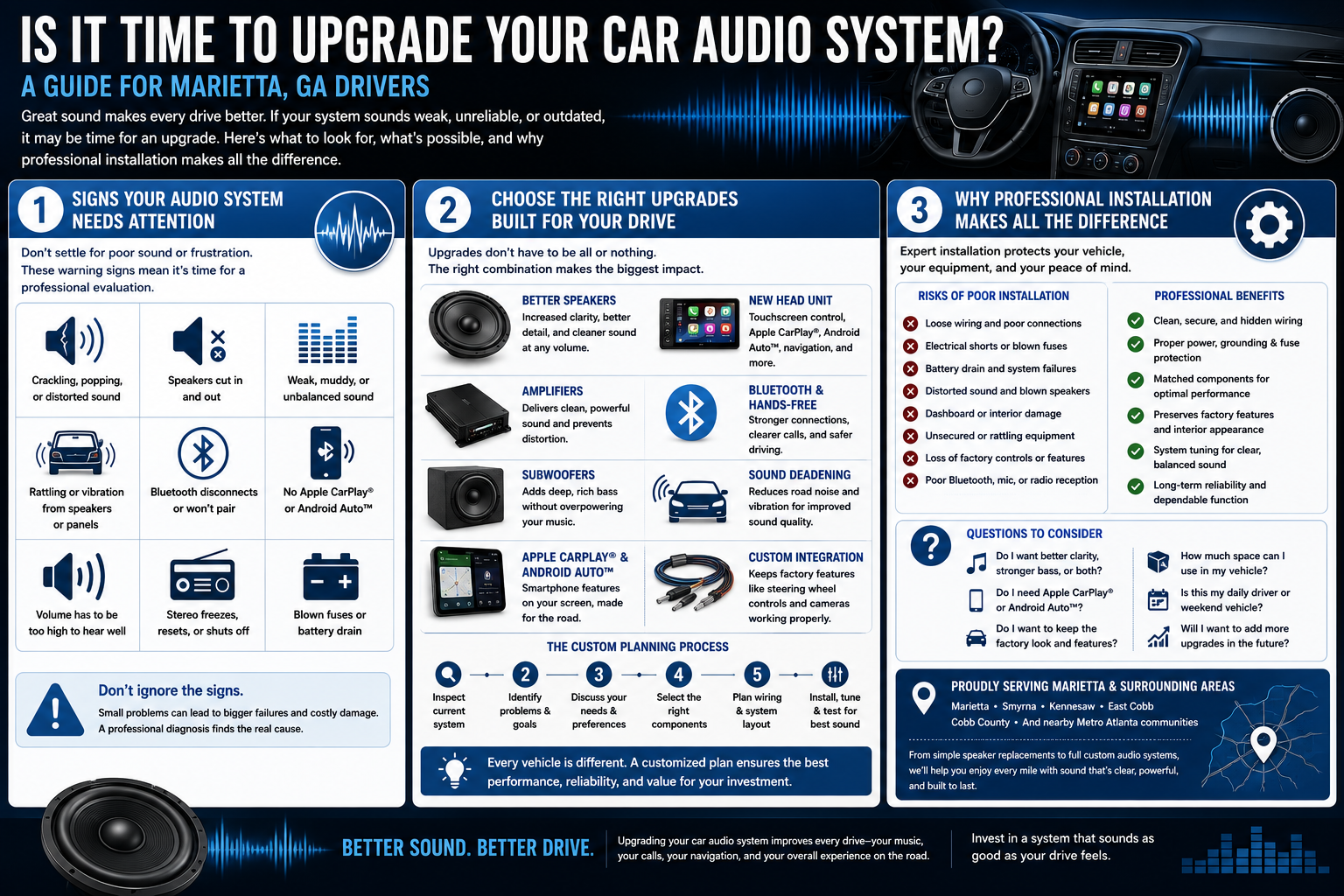
Common signs that your car audio system may need professional attention include:
- Crackling, popping, buzzing, or distorted sound
- One or more speakers that cut in and out
- Sound coming from only one side of the vehicle
- Weak bass or muddy audio that lacks clarity
- Interior panels that vibrate or rattle with the music
- A stereo that resets, freezes, or shuts off unexpectedly
- Bluetooth that disconnects or fails to pair consistently
- A factory stereo without Apple CarPlay or Android Auto
- Volume that must be turned unusually high to hear clearly
- Noticeably different sound quality between radio, Bluetooth, and other sources
A speaker that cuts out intermittently may have a loose connection, damaged wiring, or an internal failure. The issue may also come from the head unit or amplifier rather than the speaker itself. Replacing parts without diagnosing the complete system can lead to unnecessary expense while leaving the original problem unresolved.
Weak or muddy sound is another common complaint. Factory audio systems are often designed to meet basic expectations while keeping vehicle manufacturing costs under control. The speakers may produce acceptable sound at low volume but lose clarity when the music becomes more demanding.
Drivers may also notice that vocals sound distant, instruments blend together, or bass lacks depth. These problems do not always mean the stereo is broken. In many cases, the factory equipment simply cannot provide the sound quality the driver wants.
Connectivity problems are increasingly important because many drivers rely on their phones for music, navigation, and calls. Older factory stereos may have slow Bluetooth pairing, delayed audio, weak microphones, or no support for modern smartphone platforms.
Apple CarPlay and Android Auto can place commonly used phone features on the vehicle’s display in a format designed for driving. Depending on the system, drivers can access maps, calls, messages, podcasts, and music without repeatedly handling the phone. Upgrading the stereo may provide a significant improvement in both convenience and usability.
Audio problems that should be professionally diagnosed include:
- Sound that disappears when driving over bumps
- A stereo that loses power without warning
- Burning odors or unusual heat near audio equipment
- Repeatedly blown fuses
- A battery that drains after audio equipment was installed
- Speakers that distort even at moderate volume
- Amplifiers or subwoofers that shut down during use
- Factory steering-wheel controls that no longer work correctly
Electrical symptoms should not be ignored. A poorly connected stereo, amplifier, or accessory can create excessive battery drain, blown fuses, or intermittent power. An installation that was completed without the correct wiring, grounding, or fuse protection may also create reliability concerns.
Rattling sounds may come from the speaker itself, but they can also come from door panels, trim pieces, or nearby objects. A professional evaluation can identify whether the solution involves replacing a speaker, securing a component, adjusting the installation, or adding sound-deadening material.
Drivers should also consider whether the current system fits the way they use the vehicle. A factory stereo may still operate normally but lack the features needed for daily commuting. Someone who frequently uses navigation and hands-free calling may benefit from a modern multimedia receiver, while a music enthusiast may be more interested in premium speakers, an amplifier, and improved bass response.
The difference between a repair and an upgrade often comes down to the driver’s goals. Repairing a damaged wire or failed speaker may restore the original sound. Upgrading the equipment can improve clarity, power, connectivity, and control beyond what the factory system originally provided.
A professional car audio inspection can determine which components are causing the current symptoms and whether they are compatible with future upgrades. Gearhead Auto Repair can evaluate the existing system and help Marietta-area drivers choose a solution that matches their vehicle, listening preferences, and budget.
Which Audio Upgrades Make the Biggest Difference?
Upgrading a car audio system does not always mean replacing every component. The best results often come from identifying the weakest part of the current setup and choosing improvements that support the driver’s priorities.
For some vehicles, replacing the factory speakers provides the most noticeable improvement. Better speakers can reproduce voices and instruments more clearly, reduce distortion, and provide a fuller sound across a wider range of frequencies.
In other vehicles, the speakers may be capable of better performance but are not receiving enough clean power. Adding an amplifier can help the system produce clearer audio at normal and higher listening levels without forcing the factory stereo to work beyond its limits.
Popular car audio upgrades include:
- Premium replacement speakers
- Multi-channel amplifiers
- Subwoofers and custom enclosures
- Touchscreen multimedia receivers
- Apple CarPlay and Android Auto integration
- Bluetooth and hands-free calling systems
- Backup-camera integration
- Sound-deadening materials
- Factory stereo integration equipment
- Audio-system diagnostics and wiring repair
A speaker upgrade is often a strong starting point for drivers who want better detail and balance. Quality speakers can make vocals easier to understand, improve the separation between instruments, and reduce the harsh sound sometimes associated with factory equipment.
An amplifier improves the way power reaches the speakers. Clean, controlled power can help speakers perform more accurately and reduce distortion. The amplifier must be matched to the speakers and installed correctly to avoid overheating, equipment damage, or disappointing results.
A subwoofer handles lower frequencies that smaller factory speakers often struggle to reproduce. This does not automatically mean the vehicle must have overwhelming bass. A properly selected and tuned subwoofer can add depth and fullness while blending naturally with the rest of the music.
The available cargo and cabin space should be considered when choosing a subwoofer. Compact enclosures may work well for daily drivers, while larger custom systems may be appropriate for drivers who prioritize stronger output. The installation should still allow the vehicle to remain practical for its normal use.
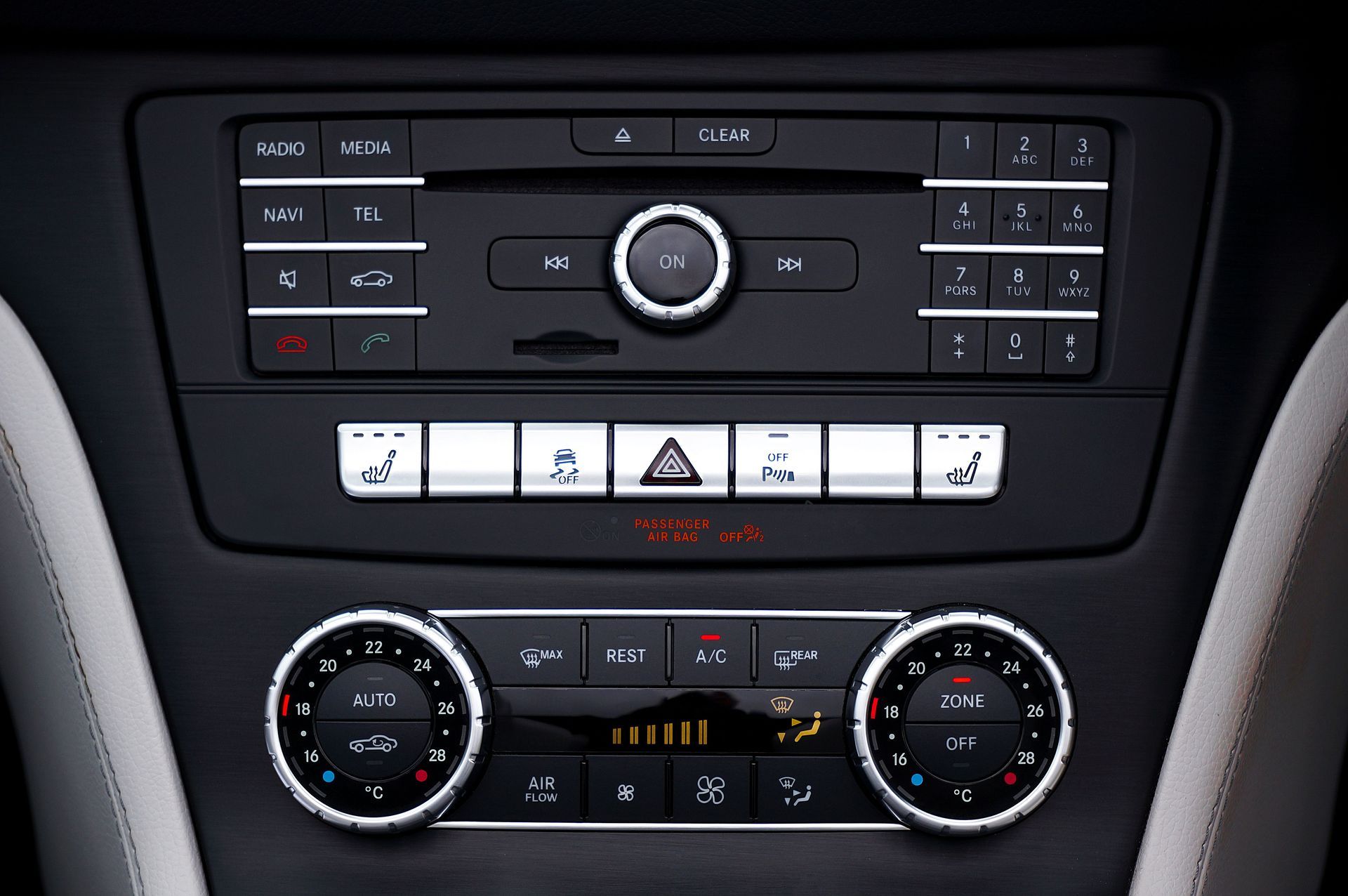
Replacing the head unit can provide some of the most noticeable technology improvements. A modern receiver may add a touchscreen, smartphone integration, improved Bluetooth, navigation compatibility, camera inputs, and better control over the system’s audio settings.
Apple CarPlay and Android Auto are particularly useful for drivers who rely on their phones throughout the day. These systems can display compatible navigation, music, messaging, and calling applications through the vehicle’s screen. The goal is to provide easier access to common functions without requiring the driver to repeatedly look down at a phone.
Sound-deadening materials can also improve the listening experience. Road noise, tire noise, and vibrating panels may compete with the audio system, especially at highway speeds. Adding properly installed damping materials inside doors or other selected areas can reduce unwanted vibration and help the speakers sound cleaner.
Why Every Vehicle Needs a Customized Sound-System Plan
No single audio package is ideal for every vehicle. A compact sedan has different interior acoustics and space limitations than a pickup truck, SUV, European performance car, or classic vehicle. The factory electronics can also vary significantly between makes, models, and trim levels.
Some newer vehicles integrate climate controls, vehicle settings, cameras, warning sounds, and steering-wheel controls into the factory display. Replacing that equipment may require specialized integration components to preserve the vehicle’s original functions.
A customized system plan should consider:
- The make, model, year, and factory audio package
- The number and location of existing speakers
- Available dashboard, door, and cargo space
- The vehicle’s electrical system
- The driver’s preferred music and listening volume
- Desired smartphone and multimedia features
- Whether the factory appearance should be retained
- Plans for future system upgrades
- The amount of road and cabin noise
The planning process typically begins with an inspection of the current equipment. The technician can identify failed components, wiring concerns, available mounting locations, and factory features that need to remain functional.
A professional car audio upgrade may follow these steps:
- Inspect and test the existing audio system.
- Identify sound-quality, wiring, or connectivity problems.
- Discuss the driver’s goals and preferred features.
- Select compatible speakers, receivers, amplifiers, or subwoofers.
- Plan component placement, wiring routes, and system integration.
- Install the equipment and protect all electrical connections.
- Tune the system for balanced, clear sound.
- Test the controls, smartphone features, and vehicle functions.
Compatibility is one of the most important parts of the process. Speakers, amplifiers, receivers, and subwoofers must work together electrically and physically. A powerful amplifier paired with unsuitable speakers can damage the equipment, while an underpowered setup may produce distortion and weak performance.
Buying individual components based only on reviews or advertised power ratings can create problems. The equipment may not fit the vehicle, connect properly to the factory wiring, or provide the type of sound the driver expected.
A professional installer can recommend components as a complete system rather than as unrelated purchases. This helps ensure that each upgrade supports the others and that the system can be expanded later when appropriate.
For Marietta drivers, a customized audio plan can range from replacing a single damaged speaker to installing a complete multimedia and sound system. The right design is the one that improves everyday use without sacrificing reliability, interior space, or essential factory features.
Professional Installation Protects Your Vehicle and Your Investment
Quality audio components cannot perform properly if they are installed poorly. Wiring, power delivery, grounding, mounting, and system tuning all affect sound quality and long-term reliability. Even a relatively simple stereo replacement may involve more than removing one unit and connecting another.
Modern vehicles often contain complex electrical systems, factory amplifiers, data connections, steering-wheel controls, cameras, sensors, and integrated displays. An installer must understand how the new equipment will interact with these existing features.
Improper installation can lead to problems such as:
- Loose or exposed wiring
- Electrical shorts or repeatedly blown fuses
- Battery drain when the vehicle is parked
- Speakers that distort or fail prematurely
- Amplifiers that overheat or shut down
- Dashboard, door-panel, or trim damage
- Rattling components or unsecured equipment
- Loss of factory steering-wheel controls
- Interference with cameras or vehicle settings
- Poor Bluetooth, microphone, or radio reception
Proper wiring is essential. Power cables should be correctly sized, securely connected, and protected with appropriate fuses. Signal wiring should be routed carefully to reduce interference. Grounds must be clean and secure to help prevent noise, unreliable operation, or damage to the equipment.
The components also need to be mounted safely. An amplifier or subwoofer enclosure should not move during normal driving or sudden stops. Speakers must fit securely in their mounting locations without interfering with windows, door mechanisms, or interior panels.
A clean installation should preserve the appearance and usability of the vehicle whenever possible. Wiring can often be hidden behind trim, under carpet, or through factory-style routes. Panels should be removed and reinstalled carefully so they fit correctly and do not develop new rattles.
Professional installation also includes protecting factory functions. Depending on the vehicle, the new stereo may need adapters or interface modules to retain steering-wheel controls, warning chimes, factory cameras, premium amplifiers, or vehicle-setting menus.
The system must be tuned after the physical installation is complete. Adjustments may include amplifier gain, crossover frequencies, equalization, time alignment, balance, and subwoofer level. These settings help the speakers work together rather than competing with one another.
Improper gain settings are a common source of distortion. Turning the amplifier gain too high does not create clean additional power. Instead, it can send a distorted signal to the speakers and increase the risk of equipment damage.
Before planning a system, drivers should consider:
- Do I want better clarity, stronger bass, or both?
- Do I need Apple CarPlay or Android Auto?
- Do I want to keep the factory stereo appearance?
- Which factory controls and features must remain functional?
- How much cargo or cabin space can the equipment use?
- Is this vehicle used for daily commuting or occasional driving?
- Do I frequently make hands-free calls?
- Will I want to add more components later?
- What type of music do I listen to most often?
Clear answers to these questions make it easier to recommend the right equipment. A driver who primarily wants reliable navigation and phone connectivity may need a very different system than someone focused on high-volume music or detailed sound reproduction.
Custom Car Audio Installation in Marietta, GA
Gearhead Auto Repair provides car audio diagnostics, repairs, upgrades, and custom installation for drivers in Marietta and surrounding Cobb County communities. The team can evaluate the factory system, identify the source of poor sound or electrical problems, and design upgrades that fit the vehicle.
Available car audio services may include:
- Replacement and premium speaker installation
- Amplifier installation and system integration
- Subwoofer installation and enclosure planning
- Touchscreen stereo and multimedia receiver installation
- Apple CarPlay and Android Auto upgrades
- Bluetooth and hands-free calling integration
- Audio wiring diagnostics and repair
- Sound-deadening installation
- Factory-system integration
- Custom audio-system design and tuning
An evaluation is especially helpful when the current system has multiple symptoms. For example, distorted sound may be caused by a damaged speaker, an amplifier problem, poor wiring, or incorrect settings. Testing the system before replacing equipment helps identify the real cause.
Drivers who want new technology can also explore multimedia options that improve connectivity while maintaining important factory features. The correct installation approach depends on the vehicle and the equipment already in place.
A professionally installed system should sound balanced at normal listening levels, remain reliable during everyday driving, and operate without creating electrical problems. It should also fit the vehicle in a way that looks intentional rather than added as an afterthought.
Gearhead Auto Repair serves drivers throughout Marietta, Smyrna, Kennesaw, East Cobb, and nearby Metro Atlanta areas. Whether the vehicle needs a single speaker replaced, a modern Apple CarPlay receiver, stronger bass, or a complete custom car audio system, the project can be planned around the driver’s needs.
If your factory stereo sounds weak, your speakers are distorted, or your vehicle lacks the connectivity features you use every day, contact Gearhead Auto Repair. A professional car audio evaluation can help you understand what is failing, which upgrades will make the biggest difference, and how to create a system that makes every drive more enjoyable.
Recent Posts